Microneedling with Exosomes: A Dermatologist's Complete Guide
How combining microneedling with exosome therapy produces superior results for acne scars, texture, and anti-aging.
Read article →Evidence-based insights on skin health, treatments, and self-care — written for patients, not textbooks.
How combining microneedling with exosome therapy produces superior results for acne scars, texture, and anti-aging.
Read article →How Growth Factor Concentrate differs from PRP, who benefits most, and a full results timeline session by session.
Read article →How Ultraformer 3 HIFU lifts and tightens skin without surgery — who it is for, what to expect, how it compares.
Read article →The errors that keep melasma from clearing — from sunscreen use to hormonal triggers — and what to do instead.
Read article →Nine evidence-based corrections to the most damaging acne habits — from over-washing to ignoring hormonal drivers.
Read article →UV, heat, hormones, and visible light — understanding the true drivers of melasma is the foundation of effective treatment.
Read article →Melasma is one of the most stubborn pigmentation conditions I see in my clinic. Understanding its true drivers — not just its triggers — is the key to lasting control.
By Dr. Prakash Acharya, MD · Board Certified Dermatologist, Kathmandu
Melasma is a chronic hyperpigmentation disorder that produces symmetrical brown to grey-brown patches on sun-exposed areas of the face — most commonly the cheeks, forehead, nose bridge, and upper lip. It affects women far more than men (approximately 90% of cases) and is especially prevalent in South and Southeast Asian populations due to a combination of genetic factors and UV exposure patterns.
In Nepal, melasma is one of the most common dermatological complaints I see — amplified by Kathmandu's high-altitude UV intensity and the cultural reliance on covering up skin concerns with makeup rather than seeking treatment.
Most patients know that "sun causes melasma" — but the mechanism is more nuanced than simple sunburn. Melasma involves an abnormal increase in melanin production driven by:
Key insight: Melasma is not just a surface pigmentation problem — it involves abnormalities in the deeper dermis (dermal melasma) and even the blood vessel network. This is why some patients don't respond to topical creams alone and need laser or light-based treatment.
This is the most common question I hear from patients who have completed treatment. The answer lies in the fact that melasma does not erase the underlying predisposition — it treats the visible manifestation. The melanocytes remain in a sensitised state.
Melasma returns when:
Effective melasma management requires a layered, patient, long-term strategy — not aggressive rapid-fire treatments:
The most important thing I tell my patients: melasma management is a marathon, not a sprint. But with the right protocol — and consistent sun protection — long-term remission is absolutely achievable.
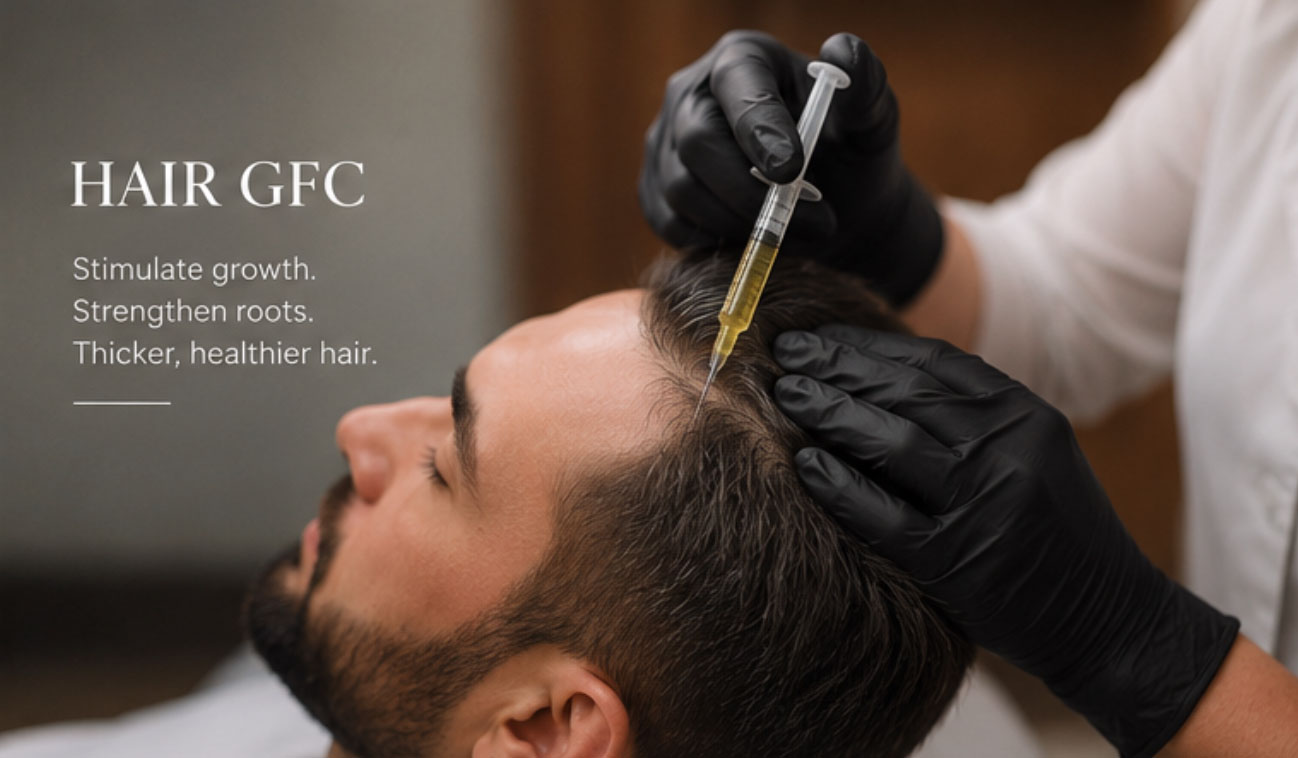
Three powerful regenerative treatments for hair loss — but each works differently and suits different types of patients. Here's how to think about which one is right for you.
By Dr. Prakash Acharya, MD · Board Certified Dermatologist, Kathmandu
Hair loss (alopecia) most commonly occurs because hair follicles miniaturise and eventually stop producing hair. The goal of regenerative treatments — PRP, GFC, and exosomes — is to deliver biological signals to the scalp that stimulate blood supply, reduce inflammation, extend the growth phase (anagen), and reactivate miniaturised follicles.
These are not "hair transplant" procedures — they don't create new follicles. They optimise and rehabilitate what is already there, making them most effective in early to moderate hair loss (before follicles are completely lost).
PRP involves drawing a small amount of your blood, centrifuging it to separate and concentrate the platelet layer, and injecting this into the scalp. Platelets release growth factors — including PDGF, VEGF, EGF, and IGF — that signal follicles to enter and sustain the growth phase.
GFC is a more refined form of PRP. Rather than using the whole platelet-rich layer, a specialised tube system is used to selectively isolate and concentrate only the growth factors — removing platelets, white blood cells, and other components that may cause unnecessary inflammation.
Exosomes are nano-sized extracellular vesicles derived from stem cells (typically mesenchymal stem cells from umbilical cord or placental tissue). They don't contain cells themselves — instead, they carry thousands of signalling molecules, growth factors, microRNA, and proteins that communicate with your scalp's own cells to drive regeneration.
The science: Exosomes essentially "reprogram" damaged or miniaturised follicular cells, delivering a rich payload of regenerative instructions that go beyond what growth factors alone can achieve. They also have potent anti-inflammatory effects — making them especially useful in inflammatory hair loss conditions.
There is no universal answer — the best treatment depends on your hair loss pattern, severity, budget, and response to previous treatments. At Reva Skin and Hair Clinic, Dr. Acharya performs a thorough trichoscopy assessment before recommending a protocol. A common approach is to start with GFC for most patients due to its superior purity and comfort, and to consider exosomes for patients with more advanced loss or inflammatory components.
The most important takeaway: all three are most effective in early to moderate hair loss. The sooner you start, the better the outcome.
 HIFU
Anti-Aging
Non-Surgical
HIFU
Anti-Aging
Non-Surgical
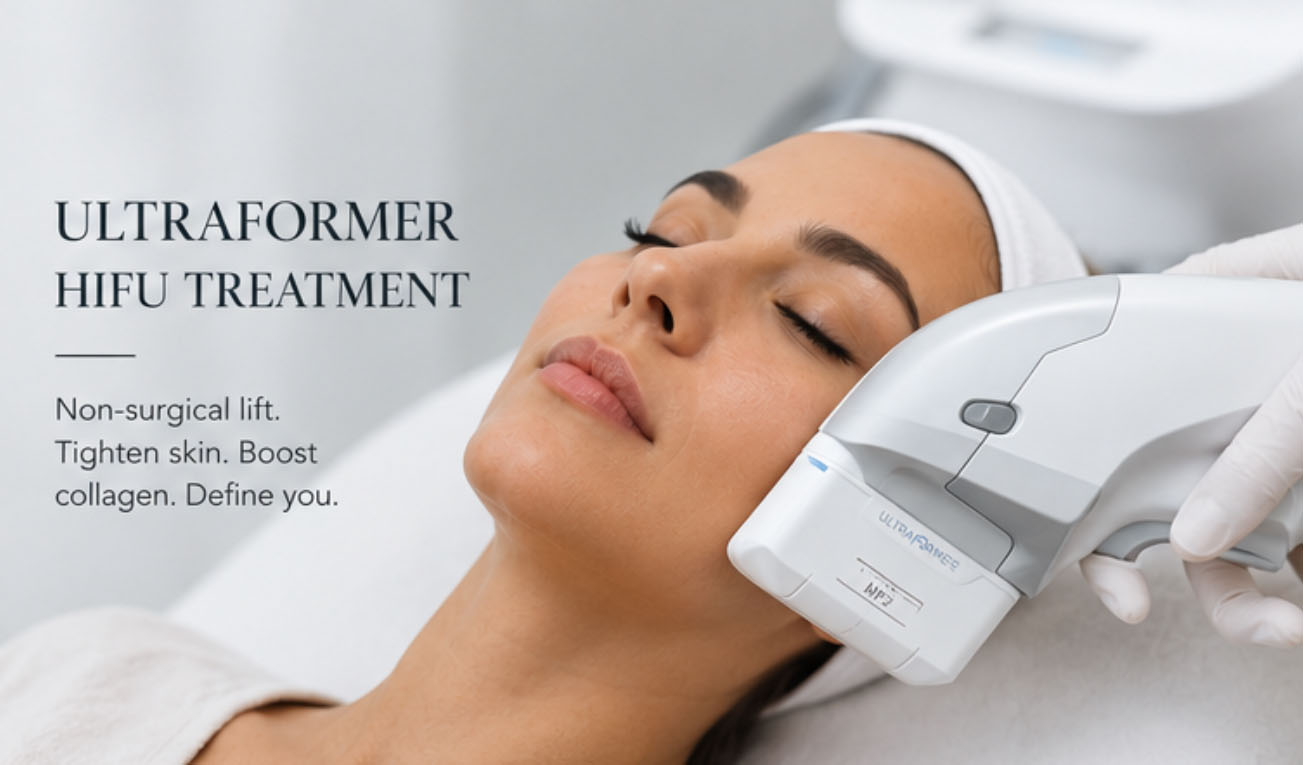
HIFU is one of the most requested non-invasive skin-tightening procedures in my clinic. Here is an evidence-based, practical overview of what it actually does, who benefits most, and when it's not the right choice.
By Dr. Prakash Acharya, MD · Board Certified Dermatologist, Kathmandu
HIFU (High-Intensity Focused Ultrasound) uses precisely focused ultrasound energy to create controlled thermal coagulation points at specific depths within the skin — reaching as deep as 4.5mm to target the SMAS (Superficial Muscular Aponeurotic System), the same fibromuscular layer that surgeons target in a traditional facelift.
At each focal point, the temperature briefly reaches 60 to 70°C, causing immediate collagen denaturation — and, critically, triggering the body's wound-healing response to produce new, organised collagen over the following months. The result is a gradual lifting and tightening effect that develops over 2 to 3 months and continues improving for up to 6 months.
HIFU is best suited for:
HIFU is not ideal for severe skin laxity (where surgery provides clearly superior results), very thin skin with little subcutaneous fat, or patients with active acne or infections in the treatment area.
Honest answer on results: HIFU produces real, measurable lifting — but it is not equivalent to a surgical facelift. The improvement is typically described as "looking refreshed" or "turning back the clock 3 to 5 years" rather than dramatic transformation. Expectations matter enormously — a detailed pre-treatment consultation is essential.
During the procedure, most patients experience a warm to hot sensation and intermittent brief sharp discomfort as the focused energy is delivered — particularly over areas with less soft tissue (jawline, cheekbones). Topical anaesthetic cream and/or oral analgesia are used to manage this.
Afterwards:
Peak results are seen at 3 to 6 months. Lifting effects typically last 12 to 18 months, after which a maintenance session is recommended. The natural ageing process continues — HIFU slows it but does not stop it. Skin quality, sun protection habits, and overall health significantly influence longevity of results.
We use world-class machine - the ULTRAFORMER 3 at Reva SKin and Hair Clinic.
Dr. Acharya performs a detailed facial analysis before every HIFU treatment — mapping the areas of laxity, assessing the fat pad positions, and customising depth and energy delivery to each patient's anatomy. This personalised approach is what separates a good HIFU outcome from a mediocre one.
Acne treatment failures are frustrating — but in most cases, they come down to a handful of avoidable errors. Here's what Dr. Acharya sees most often in clinic.
By Dr. Prakash Acharya, MD · 5 min read
Most topical acne treatments take 8 to 12 weeks to show meaningful results. Patients often switch products every few weeks based on impatience — preventing any single agent from working. Give treatments adequate time before concluding they've failed.
Over-washing and using alcohol-based or heavily foaming cleansers disrupts the skin barrier, triggers compensatory oil production, and worsens acne. Gentle, non-comedogenic cleansers twice daily are optimal. Hydration is not the enemy of acne-prone skin.
Acne-prone skin still needs hydration. Skipping moisturiser causes the skin to overproduce sebum. A lightweight, oil-free, non-comedogenic moisturiser is essential — especially when using drying actives like retinoids or benzoyl peroxide.
The evidence linking high-glycaemic diets and dairy to acne is increasingly robust. High-sugar foods and white carbohydrates spike insulin, which in turn stimulates sebum production. Reducing these and monitoring the effect is worth doing in parallel with topical treatment.
Jawline and chin acne in women is almost always hormonally driven. Over-the-counter products rarely address the root cause. A dermatologist assessment can identify hormonal imbalance (including PCOS) and introduce treatments like spironolactone or appropriate contraceptive options that work on the actual driver — not just the surface.